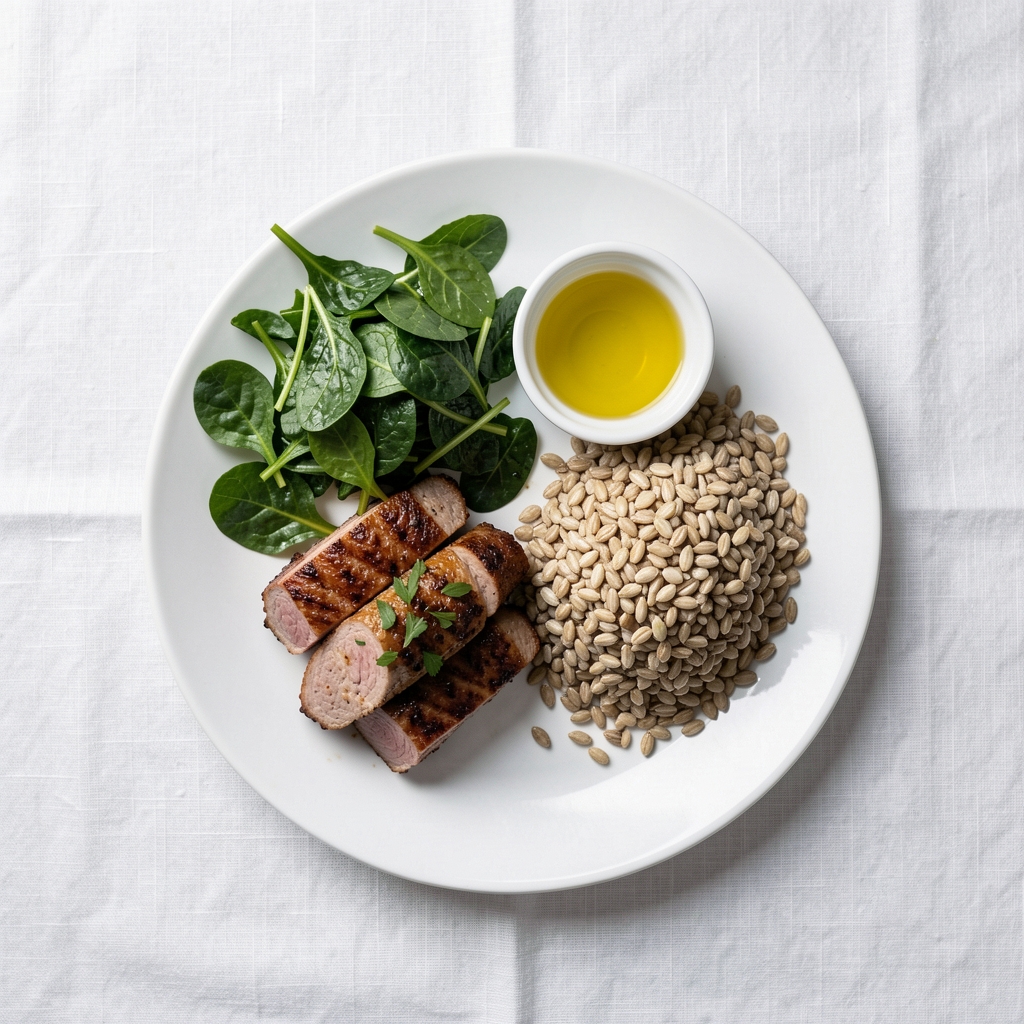
The mechanics of a well-structured weekly menu are less complex than they appear on paper. What routinely derails consistent eating habits is not a deficit of nutritional knowledge, but rather the absence of a repeatable planning framework — a structured method for mapping protein sources, fibre-rich vegetables, and whole grains across the seven days of a week.
The Architecture of a Balanced Plate
Published dietary guidelines consistently identify a common structural pattern across populations with stable eating routines: roughly half the plate is occupied by non-starchy vegetables and fruit, a quarter by whole-grain carbohydrate sources, and a quarter by protein. That ratio is not a strict directive — it is an observational baseline, the kind of proportional guide that nutrition researchers return to repeatedly when analysing long-term dietary data.
The application of this structural pattern to a weekly menu requires one additional layer: variety across the seven-day cycle. A plate that reproduces the same protein and vegetable combination every day satisfies the macronutrient ratio without delivering the micronutrient breadth that whole-food diversity provides. Rotating between legumes, eggs, oily fish, and lean poultry as primary protein sources, and cycling through at least four distinct vegetable families across the week, produces a diet with substantially broader nutritional coverage.
Understanding this architecture before opening a meal-planning template is the first procedural step. The template is merely a recording tool — the structural logic must come first.
"A consistent grocery planning routine is the single most reliable predictor of adherence to a balanced eating pattern across a working week."
— Eleanor Whitfield, Talep Letters
Seasonal Cooking and the Fibre-Rich Diet
Seasonal produce integration serves two functions simultaneously. It introduces natural menu variation without requiring a redesign of the planning framework, and it consistently delivers higher fibre density than out-of-season alternatives that have spent extended periods in cold storage. A late-winter menu anchored in root vegetables — parsnips, celeriac, beetroot, and squash — routinely outperforms a summer-menu replica in total dietary fibre per calorie.
The practical method for incorporating seasonality into a weekly menu is to maintain a rotating list of what is currently available at local markets. This does not require a sophisticated tracking system — a single column in a planning notebook updated monthly is sufficient. The goal is to ensure that the vegetable slots in the weekly menu template are filled from the current-season list rather than defaulting to the same four or five year-round items.
Dark leafy greens deserve specific attention in any fibre-rich diet plan. Kale, chard, cavolo nero, and spinach contribute both soluble and insoluble fibre, along with micronutrient profiles that non-leafy vegetables rarely replicate. Incorporating one dark leafy green serving per day — whether as a cooked base, a salad component, or a blended addition to a morning bowl — addresses a gap that many otherwise balanced weekly menus leave unfilled.

Seasonal market produce — photographed February 2026
Portion Awareness Without Calorie Counting
Calorie awareness is a component of everyday nutrition practice, but precise calorie counting is rarely the mechanism that produces lasting dietary change. What nutritional research more consistently identifies as effective is portion awareness — a qualitative understanding of relative serving sizes that does not depend on scales or labels.
The hand-portion method, documented across multiple nutritional guidance frameworks, uses the dimensions of the individual's own hand as a calibration tool. A palm-sized portion corresponds roughly to a protein serving of 85–100 grams for most adults. A cupped hand represents an approximate 40-gram carbohydrate serving. A thumb provides the fat-serving reference point. These proxies are not precise — they are calibration tools that reduce the cognitive load of portion management without eliminating it entirely.
What the hand-portion method does effectively is restore the relationship between meal preparation and portion outcome. Home-cooked meals prepared with portion-awareness protocols consistently produce lower total calorie intake per meal than restaurant equivalents, largely because the cook retains control over ingredient quantities throughout preparation.
- ■ Weekly menu variety across four or more vegetable families delivers broader micronutrient coverage than repetitive menus meeting the same macronutrient ratio.
- ■ Seasonal produce rotation introduces natural fibre-density variation without requiring menu redesign.
- ■ Portion awareness frameworks, applied consistently to home-cooked meals, reduce average calorie intake per sitting without requiring precise measurement.
- ■ A grocery planning session conducted once per week, anchored to the seasonal-produce list, is the most operationally reliable entry point for a structured meal-planning routine.
The Grocery Planning Session as Anchor Point
Among the practical methods documented in nutritional behaviour research, the weekly grocery planning session functions as the single most reliable structural anchor for consistent eating habits. The session — typically 20–35 minutes on a Sunday or Monday — produces the shopping list that determines what raw ingredients enter the kitchen for the week ahead. Without that list, meal preparation defaults to convenience decisions that progressively erode the dietary framework regardless of the individual's nutritional knowledge.
An effective planning session follows a sequence: first, identify the protein sources for the week's main meals; second, assign a vegetable pairing from the seasonal list to each protein; third, select the whole-grain carbohydrate base for each day; fourth, identify the breakfast and morning meal pattern; fifth, note any lunch or workplace eating occasions that require preparation in advance. The result is a complete ingredient list, not a rigid meal-by-meal schedule — which allows for daily adjustment within a fixed ingredient set.
The food journal is a complementary tool that supports the planning session rather than replacing it. Recording what was actually eaten versus what was planned over a two to three week period produces the calibration data needed to refine the planning framework. Gaps between plan and execution typically reveal two or three recurring friction points — specific meals that are regularly skipped or substituted — which can then be addressed with more appropriate alternatives in the next planning cycle.
Hydration Habits Within the Meal Framework
Hydration planning is frequently omitted from meal-planning frameworks because it is not a food category in the conventional sense. This omission is nutritionally significant. Adequate daily fluid intake supports digestive function, appetite regulation, and consistent energy levels across the working day — three variables that directly influence eating behaviour and meal adherence.
The integration of hydration into the weekly menu is straightforward. The planning session should include a default fluid-intake target — typically 1.5 to 2 litres for most adults under normal activity conditions — and assign that target to specific daily anchors: a glass of water at each meal, a hydration note at mid-morning and mid-afternoon. The mechanism is not complex; the value is in making fluid intake a deliberate, planned element of the nutritional day rather than an afterthought.
Gut-friendly recipes also benefit from attention to fluid balance. Fibre-rich diets, by their nature, require corresponding fluid intake to function as intended in the digestive system. A high-fibre weekly menu with insufficient fluid intake produces discomfort rather than the digestion support that fibre is intended to provide. Planning both together — fibre increase and fluid intake target — is the standard approach in published nutritional guidance for individuals increasing their whole-food intake.